The Best Child Car Seats
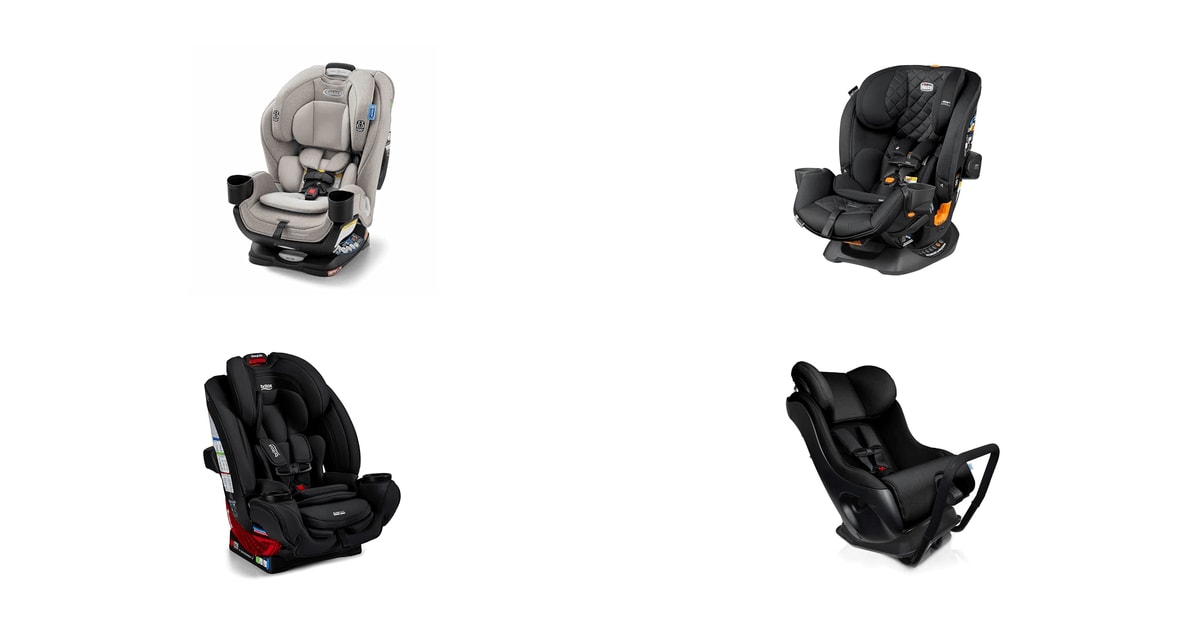
A car seat is one of the few things you buy for your kid that has to work perfectly on a day you hope never comes. The rest of the time, it's just awkward furniture you fight with. You'll buckle it in a dark parking garage, tighten a harness around a squirming toddler, and haul it to grandma's house over a holiday weekend. So the seat that protects your child best is usually the one you can install and use correctly every single time, without pulling out the manual again.
Here's the honest part: no seat installs itself, and every seat sold in the U.S. already passes the same federal crash standard. What separates them is how hard it is to get a tight, correctly angled install in your specific car, how long the seat keeps your child rear-facing, and what the fabric is treated with. Fit is vehicle-specific, too. A seat that drops right into a minivan can be a wrestling match in a compact sedan, and every seat eventually expires.
We read manufacturer specifications, published reviews, and owner feedback for each seat here, paying closest attention to weight ranges, install hardware, width, and what parents say goes wrong after a year of daily use. Then we matched seats to the stages families actually shop for: a first convertible, a do-everything seat, and a newborn carrier. We think that the Graco Extend2Fit 3-in-1 is the best child car seat for most people, and that the Chicco OneFit Max ClearTex is the one to buy if you want the least fussy installation.
Everything we recommend

A long rear-facing range and a booster mode, in a big shell
The easiest install here, if you can pay more for it

One seat from birth to booster, if you have the room for it
How we picked
Rear-facing range. Rear-facing is the most protective position for young children, so we favored seats that go past the common 40-pound ceiling. Specifications and legroom design both mattered, since a seat you can't fit a toddler's legs into gets turned forward early.
Install hardware. We looked for belt paths and tensioning systems that make a correct, tight install repeatable without special knowledge. Published ease-of-use evaluations and owner feedback about first-attempt installs carried the most weight.
Width and vehicle fit. We compared listed dimensions against what parents report in sedans, midsize SUVs, and three-across situations. Anything close to 20 inches wide gets flagged as a fit risk rather than a universal recommendation.
Materials and cleaning. We preferred fabrics made without added flame retardants and covers that survive a washing machine. Owner feedback about reassembling covers and rerouting harnesses shaped how we described the cleaning experience.
Years of use. We counted how many stages each seat covers and where the harness and booster limits land. A seat that spans infancy through the booster years earns a higher price the way a longer warranty does.
Top pick
A long rear-facing range and a booster mode, in a big shell
Graco Extend2Fit 3-in-1 Convertible Baby Car Seat
The Extend2Fit is a three-stage convertible that holds a child rear-facing to 50 pounds, then carries them through a harness and a highback booster. An extension panel adds up to five inches of legroom, which is what makes that long rear-facing window livable.
$269.99fromAmazonIt keeps your child rear-facing longer than most seats in its class. The rear-facing harness works from 4 to 50 pounds, and pediatric guidance is to stay rear-facing until your child reaches the seat's top weight or height. Plenty of less expensive convertibles stop at 40 pounds, which for a tall four-year-old can mean turning the seat around a year early. With this one, you don't have to.
The extension panel is what makes that number usable. A four-position panel slides out to add up to five inches of legroom, so a long-legged toddler isn't folding their knees against the seat back. Cramped legs are the complaint that pushes most parents to turn a seat forward early. It's a comfort problem, not a safety one, and solving it lets you follow the rear-facing advice without a daily argument.
It covers three stages, so this may be the last seat you buy. You get rear-facing from 4 to 50 pounds, forward-facing with the harness from 26.5 to 65 pounds, and a highback booster from 40 to 100 pounds. That's roughly birth through the early school years in one purchase. If you're buying your first seat and don't want to think about the next one, that range matters more than any single feature.
The everyday adjustments don't require rethreading anything. The headrest and harness move together in one motion across ten height positions, so a growth spurt takes seconds instead of an evening with the manual. Graco builds the shell to its ProtectPlus standard for side and frontal impact, and published ease-of-use ratings put it above average across all three modes. Owners rarely report trouble getting a tight install.
Flaws but not dealbreakers
It's a big seat, and you'll feel that in a small car. At roughly 19 inches wide and nearly 21 inches front to back, it crowds whatever sits next to it and can push the front passenger seat forward when it's rear-facing. Three across a standard bench isn't realistic. Measure your back seat before you commit, especially in a compact sedan.
Booster mode has a waiting period, and the cover is a chore. Your child has to reach 40 pounds before the harness-to-booster mode applies, so the last stage sits unused for years. The cover is machine washable, but owners consistently report that getting it back on with the harness routed correctly takes patience. Do that on a Saturday, not five minutes before school.
Runner-up
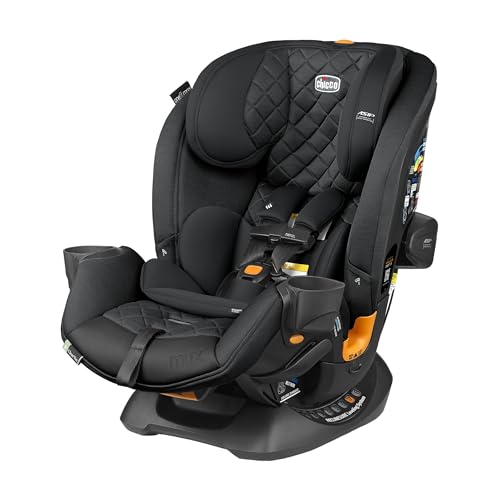
The easiest install here, if you can pay more for it
Chicco OneFit Max ClearTex All-in-One Car Seat
The OneFit Max ClearTex is an all-in-one that runs from a 5-pound newborn to a 100-pound kid in booster mode. Its self-tensioning belt lock takes the guesswork out of a forward-facing install, and the fabric is made without added flame retardants.
$379.99fromAmazonThe install hardware does the tightening for you. The LeverLock system applies the right amount of belt locking tension for a forward-facing vehicle-belt install, so you're not bracing a knee in the seat and yanking. Misuse, not seat design, is what usually cuts a car seat's real-world protection. Anything that makes a correct install repeatable at 7 a.m. is worth paying for.
It's narrow for an all-in-one, which is the whole point in a packed back seat. At about 19.5 inches wide with a deliberately slim shell, it gives you a fighting chance at three across in a midsize car, or leaves room for an adult beside it. It also spans 5 to 100 pounds, so the included newborn positioner and a grade-schooler's booster come out of the same seat.
The materials are the cleanest story among our picks. ClearTex means the fabric is made without added flame retardants, and the seat is GREENGUARD Gold certified for low chemical emissions. Car seats bake in hot cars for years, and that's the exposure parents keep asking about. If you've been reading about flame-retardant chemicals in kids' gear and want to stop thinking about it, this is the simple answer.
Small conveniences add up when you're doing this twice a day. The magnetic chest clip catches on its own, harness pockets hold the straps out of the way while you load a wiggly kid, and a couple of parts go in the dishwasher. The headrest adjusts across a wide range, and there's more rear-facing legroom than earlier OneFit seats offered.
Flaws but not dealbreakers
Rear-facing tops out at 40 pounds. That's the standard limit, but it's ten pounds short of our top pick and of the Britax. For a big kid, that can be the difference between turning forward at three and turning forward at four. If extended rear-facing is your main priority, this isn't the seat.
It's heavy, and it costs more than the Graco. At about 27 pounds, it's not something you casually move between two cars every weekend. Combine that weight with the higher price and it makes the most sense as a seat you install once and leave alone.
Upgrade pickOn sale
One seat from birth to booster, if you have the room for it
Britax One4Life All in One Convertible Car
The One4Life is built to be the only seat a child ever needs, from a 5-pound newborn rear-facing to a 120-pound kid in a highback booster. Its ClickTight base makes a seatbelt install about as hard to get wrong as it gets.
$351.99fromAmazonList priceClickTight turns a seatbelt install into three steps. You pinch the base open, thread and buckle the belt, then click the base closed. The belt path sits inside the seat rather than around it, so the routing error that lets a seat slide or rotate is very hard to make. If you've ever finished an install and still wondered whether you did it right, this is what fixes that feeling.
Nothing else here lasts as long. It goes rear-facing from 5 to 50 pounds and up to 49 inches, forward-facing with the harness from 30 to 65 pounds, then highback booster from 40 to 120 pounds. Britax designs it for about ten years of use. Buying it once instead of buying an infant seat, a convertible, and a booster changes the math a lot.
The structure underneath is serious. There's a steel frame, Britax's SafeCell base, two layers of energy management, and a patented V-shaped tether. Britax says it's side-impact tested to FMVSS 213a and frontal tested to FMVSS 213. You can't see any of that once the cover is on, but it's the reason this seat weighs what it does.
Living with it is easy in the ways that matter. The 15-position harness and headrest adjust together with one hand, no rethreading. The nine-position recline has an easy-read indicator, which helps on those steeply angled bench seats that fight every install. And the cover is machine washable and naturally flame-retardant with no added chemicals, so a milk spill isn't a two-day event.
Flaws but not dealbreakers
It's the heaviest and most expensive seat in this guide. At about 30 pounds, moving it between two cars is a genuine hassle, and it's not a seat you'll carry through an airport without regret. Buy it for the car it will live in.
Width makes three across unlikely. At roughly 19.5 inches, it takes up more than a third of most back seats. If you're fitting three kids on one bench, look at a narrower seat instead and don't count on a lucky puzzle-fit.
Who this is for
This guide is for parents buying a seat for a child from birth through the booster years, in a normal family car. If you're shopping for a first seat and want one purchase to carry you as far as possible, start with our top pick. If your child is already close to 40 pounds and just needs a booster, or if you need a seat for a specific medical or special-needs fit, this isn't the right guide for you.
We cover infant seats, convertibles, and all-in-ones sold in the U.S., all of which meet the same federal crash standard. We don't cover backless boosters, travel vests, or seats sold only outside the U.S. And no guide can tell you whether a given seat fits your car. Check the width of your back seat and your owner's manual for anchor locations and weight limits before you buy anything here.
How we picked
We compared specifications, published reviews, and owner feedback against five things. Rear-facing range: we favored seats that hold a child rear-facing past the usual 40-pound limit, with enough legroom that you'll actually use it. Install hardware: belt paths and tensioners that make a tight, correct install repeatable, since misuse is what erodes real-world protection. Width and vehicle fit: listed dimensions checked against what parents report in sedans and three-across setups. Materials and cleaning: fabrics made without added flame retardants and covers that go in the washing machine. Years of use: how many stages a seat covers, because a seat that spans infancy through booster age justifies a higher price the way a long warranty does.
Other child car seats worth considering
If you're shopping for a newborn: The UPPAbaby Mesa Max Infant Car Seat/Base with ($429.99) — The UPPAbaby Mesa Max is an infant-only seat, and it solves the problem that trips up brand-new parents: knowing whether the base is actually installed right. The SmartSecure system flips a red indicator to green when tension and angle are correct, and a load leg braces against the vehicle floor to soak up crash energy. The carrier clicks straight onto Vista and Cruz strollers, so you're not waking a sleeping baby to transfer them. The catch is obvious. Your child will outgrow it in about a year, and then you'll buy a convertible anyway. The load leg also needs clear floor space, which some vehicles don't have. UPPAbaby backs it with a product lifetime warranty.
The competition
This is what our research surfaced, not a survey of every seat on the market. Car seat lineups turn over constantly, colorways come and go, and a seat that's excellent in one car can be a poor fit in another. Treat the seat below as a real option with a specific job rather than a runner-up we dismissed.
The Clek Fllo Convertible Car Seat - Compact ($429.99) — The Clek Fllo is the narrowest seat we looked at, at under 17 inches wide, and it's built around extended rear-facing to 50 pounds with a steel anti-rebound bar that limits how far the seat rotates in a crash. It's the one seat here designed to the Swedish Plus Test protocol, a stricter rear-facing standard than U.S. rules require, and the zip-off fabric is flame-retardant-free and made without PFAS. It lost to our picks on flexibility rather than safety: there's no booster mode, so you'll buy another seat around 50 pounds, and the rigid hardware doesn't fold flat, which makes storing it or swapping cars annoying. It's also premium-priced without the years of use the Britax gives you. Buy it if you need three seats across one bench, or if extended rear-facing and chemical-free materials are the reason you're shopping at all.
Installation and fit
Once the seat is in, grab it at the belt path and push. If it moves more than an inch side to side or front to back, it's not tight enough. Check your owner's manual for anchor locations and the combined weight limit, which is usually 65 pounds of child plus seat; past that, install with the vehicle seatbelt instead. Register the seat so you get recall notices, and check the manufacture date on the shell, because every seat expires. Never use a seat that's been in a crash, even a minor one, and never buy used without knowing the full history. Most fire stations and children's hospitals have certified technicians who'll check your install for free. Use them, not just the first time.
Questions we get
What's the safest car seat for a newborn?
For a newborn specifically, the UPPAbaby Mesa Max is our recommendation. Its indicator system tells you when the base is at the right angle and tension, and its load leg braces against the floor to absorb crash energy. That feedback matters most for first-time parents who don't yet know what a correct install feels like. A convertible seat with a low starting weight, like our top pick, also works from birth if you'd rather buy one seat.
How long should a child stay rear-facing?
Until they hit the maximum weight or height their seat allows, not until a birthday. Pediatric guidance is explicit about that, and modern convertibles allow rear-facing to 40 or 50 pounds, which for most kids means somewhere between three and five years old. Rear-facing spreads crash forces across the whole back, head, and shoulders instead of concentrating them at the harness straps. If your child's legs look cramped, that's a comfort issue, not a reason to turn the seat around.
What's the difference between a convertible and an all-in-one seat?
A convertible seat goes rear-facing and then forward-facing with a harness, usually topping out around 65 pounds. An all-in-one adds a third mode, a highback booster that uses the vehicle's seatbelt, extending use to 100 or 120 pounds. All-in-ones like the Britax One4Life and Chicco OneFit Max cost more up front but can replace three separate purchases. If you want one seat per child from infancy through early elementary school, that's the trade you're making.
Which seat is easiest to install correctly?
Among the convertibles and all-in-ones here, the Chicco OneFit Max ClearTex and the Britax One4Life are the standouts, for different reasons. Chicco's LeverLock applies the correct belt tension for you, while Britax's ClickTight routes the belt inside the seat so you physically can't run it the wrong way. For infant seats, the Mesa Max's green indicator gives you a clear yes-or-no answer on the first try. Whichever you pick, still do the one-inch check at the belt path.
Is a less expensive car seat as safe as a premium one?
Every seat sold in the U.S. passes the same federal crash standard, so a budget seat gives you genuine, certified protection. What more money usually buys is easier correct installation, a higher rear-facing limit, extras like an anti-rebound bar or load leg, and fabrics made without added flame retardants. Our top pick is proof that strong ease-of-use scores and a 50-pound rear-facing limit don't require a premium seat. The pricier options address specific failure modes the federal minimum doesn't cover.
When can my child move to a booster seat?
When they max out the harness on their current seat, not at a set age. Most guidance suggests waiting until a child is at least four years old, weighs at least 40 pounds, and can sit properly for a whole trip without slouching, leaning, or grabbing at the belt. A booster only works if the seatbelt fits right afterward. The shoulder belt should cross the chest and collarbone, never the neck, and the lap belt should sit low across the hips.
Why you should trust us
For this guide:
- We read the manufacturer specifications and listing details for every seat here, comparing weight ranges, dimensions, harness hardware, and fabric treatments side by side.
- We reviewed published evaluations of car seat ease of use and pediatric guidance on rear-facing to decide which features actually change outcomes for families.
- We read owner feedback for recurring themes, especially complaints about cover reinstallation, seat width in smaller cars, and how confident parents felt about their first install.
- We read owner reviews on every listing, weighted toward the critical ones, because that is where the recurring failures show up.
- We have a systematic way of automatically fetching the latest prices, so the numbers on this page stay current.
- This is a research-focused guide, so the team may not own every product listed — though we often do own the top winners, which gives us extra context for the recommendations.
- We don't accept free products, and the retailer commission never changes which product we recommend.
Sources
NHTSA Car Seat Ratings & Ease-of-Use Database 2025–2026, NHTSA
IIHS Child Seat Ease-of-Use Ratings, IIHS
AAP Policy Statement: Child Passenger Safety, American Academy of Pediatrics
Consumer Reports Best Car Seats of 2026, Consumer Reports
Wirecutter Best Car Seats 2026, Wirecutter / NYT
NHTSA Traffic Safety Facts: Occupant Protection 2024, NHTSA
Safe Kids Worldwide Car Seat Study 2025, Safe Kids Worldwide
Swedish National Road and Transport Research Institute (VTI) — Plus Test Protocol, VTI Sweden
Amazon product listings and owner reviews for all 5 products
Manufacturer specification pages for each product
Some passages in this guide may be paraphrased with AI help. Prices are refreshed automatically.
More like this.
Continue exploring electronics reviews and recommendations.

The Best Parking Sensors and Reversing Aids
Most of the trouble in a parking lot happens in the last few feet, at walking speed, with your neck twisted over your shoulder. A camera or a set of…

The Best Bluetooth Multi-Device Keyboards
A multi-device keyboard earns its keep in the small moments. You're typing an email on your work laptop, a Slack message pops up on your personal desktop,…

The Best All-Season Tires
Your tires are the only thing connecting a two-ton car to the road, and most of us think about them once every few years, in a hurry, after a nail or a…

The Best Gifts for Music Lovers and Audiophiles
Music gear is one of the rare categories where a gift actually changes someone's day. Better headphones turn a grim commute into an hour they look forward…

The Best Brake Pads
Brake pads are the one part of your car that has to work perfectly on the worst day you'll ever have behind the wheel. They're also a consumable, so most…

The Best Portable External SSDs
A portable SSD is the rare gadget that quietly gives you back time. Copying a day's worth of 4K footage off a camera card, backing up a laptop before a…