The Best Home Blood Pressure Monitors
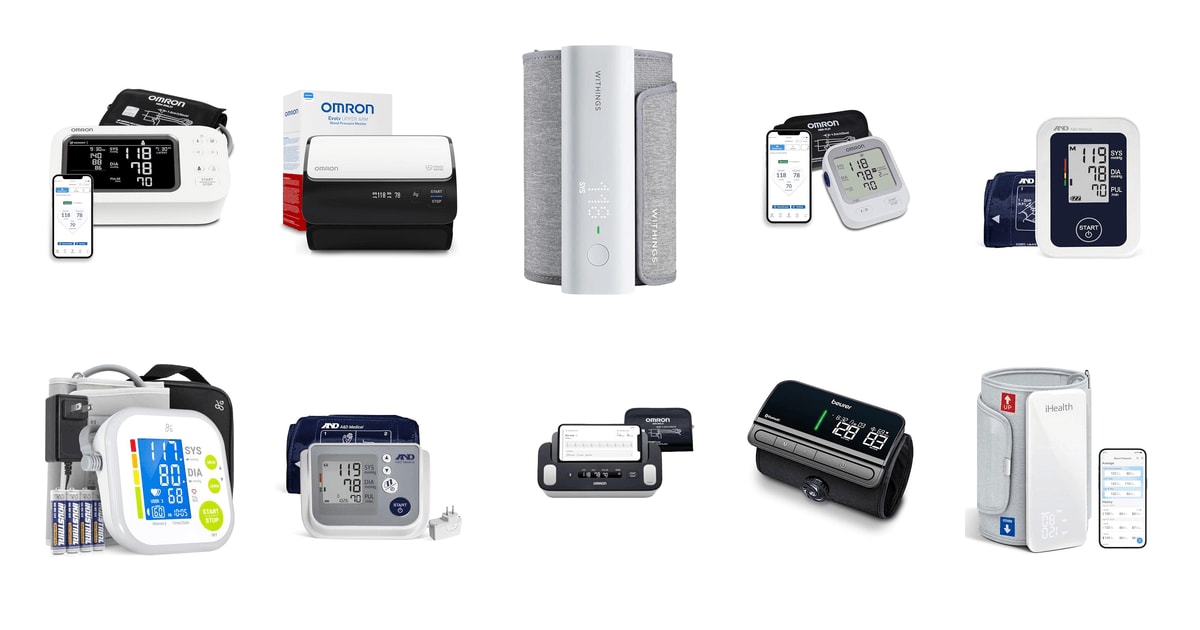
Blood pressure moves all day. It's higher after coffee, higher when you're running late, and often higher in a doctor's office than anywhere else. That's why a cuff on your kitchen counter can tell you more than two readings a year at a clinic. A good one takes about a minute, stores what it finds, and hands your doctor a pattern instead of a snapshot. What you want is an upper arm cuff that fits, buttons you'll actually press, and numbers you can read without hunting for your glasses.
No home monitor diagnoses anything. Every device here can be thrown off by a loose cuff, a chair without a back, or crossed legs, and none of them will tell you that's what happened. Cuff sizing is the weak link. Most of these fit arms in roughly the 9-to-17-inch range, so if your arm falls outside that, the reading is a guess. Irregular-heartbeat flags are just flags, too. They earn you a phone call to your doctor, not an answer.
Brand matters less than validation, but it isn't nothing. Omron and A&D Medical turn up in clinical settings and publish accuracy documentation that's easy to find; smaller brands often don't. Connectivity is worth paying for only if you'll actually open the app, and plenty of people are better served by a big backlit screen and one button. We think that the Omron Platinum is the best home blood pressure monitor for most people, and that the A&D Medical UA-651 is the one to buy if you'd rather skip the app entirely.
Everything we recommend

Averaged readings and AFib screening in one easy device

Straightforward accuracy, if you don't need an app

A big backlit screen and nothing to set up
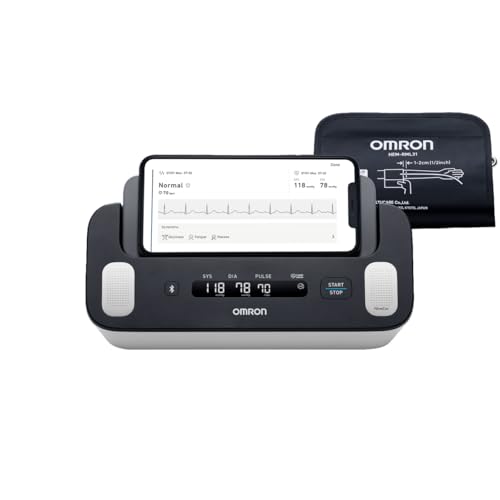
Blood pressure and a single-lead EKG in one sitting

Automatic Wi-Fi syncing, even with your phone elsewhere
How we picked
Clinical validation. We limited the guide to upper arm monitors with documented validation under the ESH, BHS or AAMI/ISO 81060-2 protocols, checked against published registries. Anything resting on a vague accuracy claim didn't make the cut.
Cuff fit and range. A cuff that doesn't fit ruins the reading, so we compared stated arm circumference ranges and whether the maker sells alternate sizes. Devices with fit or position detection got extra credit.
Display and controls. We favored large digits, backlighting where it exists, and one-button operation. Owner feedback is consistent that a monitor which is annoying to read is a monitor that stops getting used.
Memory and sharing. We looked at how many readings each device stores, whether it keeps users separate, and how easily a history reaches a doctor by Bluetooth, Wi-Fi or printout.
Rhythm detection. We noted which monitors flag an irregular heartbeat and which record an actual EKG trace, since that distinction matters for anyone being watched for AFib.
Top pick
Averaged readings and AFib screening in one easy device
OMRON Platinum Blood Pressure Monitor for Home
The Platinum removes the two things most likely to mislead you: a single unrepresentative reading and an unnoticed irregular rhythm. It averages three measurements automatically, screens for AFib every time, and keeps 100 readings each for two people sharing the cuff.
$97.17fromAmazonIt won't let you trust one reading. A single measurement is a mood ring. The Platinum's TruRead mode takes three in a row, about a minute apart, and shows you the average. That's the approach clinical guidance recommends, and it's the one everybody skips when they're in a hurry. You press start once and walk away with a number worth writing down.
AFib screening comes along for free. Every time you check your pressure, the cuff also looks for the rhythm pattern associated with atrial fibrillation. That matters because AFib tends to show up in short episodes between appointments, when nobody's watching. It's a screen, not a diagnosis. But a flag that keeps reappearing is exactly what your doctor wants to hear about.
The morning-average indicator catches a pattern you'd otherwise miss. Pressure that spikes in the early hours carries extra cardiovascular risk, and you won't see it by checking whenever you happen to remember. The Platinum tracks your morning numbers separately and tells you when that average runs high. If you take medication at night, this is the feature that shows whether it's still working at 6 a.m.
The app is genuinely useful, not just a checkbox. Bluetooth pushes readings to Omron Connect, which stores them without a limit and feeds Apple Health and Google Fit. From there you can hand your doctor a report instead of a scribbled index card. Two people can each keep 100 readings on the device itself, so a couple can share one monitor without tangling their histories.
Everything you need is in the box. You get the wide-range D-ring cuff for arms 9 to 17 inches, an AC adapter, a storage case and four AA batteries. That sounds minor until you've bought a monitor whose adapter is sold separately. The cuff also wraps one-handed, which matters when you're measuring your own arm.
Flaws but not dealbreakers
It runs on AA batteries. There's no rechargeable pack, so eventually you'll be swapping cells, usually right when you want a reading. The included AC adapter fixes that if the monitor lives in one spot, but it's another cord on the nightstand.
The good stuff lives in the app. On the device you get recent readings and the morning indicator. Long-term trends, exports and anything you'd share with a doctor need a paired phone. If you don't want a health app on your phone, you're paying for features you won't use.
It costs more than a plain validated monitor. Averaging, AFib screening and dual-user memory are real advantages, but a simpler cuff measures the same artery. If you just need daily numbers and a big display, spend the money elsewhere in this guide.
Runner-upOn sale
Straightforward accuracy, if you don't need an app
A&D Medical Blood Pressure Monitor for Home
The UA-651 is a one-button monitor of the kind medical offices actually keep around. It skips wireless sync entirely and puts the effort into basics: a wide cuff with fit detection, oversized digits, and automatic averaging of everything it has stored.
$28.79fromAmazonList priceOne button, no menus, no pairing. You wrap the cuff, press start, read the number. That's the whole interaction. For an older parent, or for anyone who'll abandon a device that asks them to make an account, that simplicity is the feature. The oversized digits are legible from across a kitchen table.
Cuff fit detection catches the most common home-measurement mistake. A cuff that's too loose reads high, and most people never realize theirs is. The UA-651 checks placement and tells you when it's wrong before the number lands. The included wide-range cuff covers arms from 8.6 to 16.5 inches, and A&D sells other sizes if you fall outside that.
Snapshot Averaging builds a baseline so you don't do math. The monitor averages its stored readings and shows the running figure, which is closer to what your doctor cares about than whatever today's number happens to be. It holds 60 readings, roughly a month of morning-and-evening checks.
A&D built its name in clinical settings, not consumer aisles. The brand shows up in hospitals and physician offices, and it publishes validation documentation for its home devices. If your priority is that the number be right rather than that the device be clever, this is where to start.
Flaws but not dealbreakers
There's no Bluetooth. The A&D Heart Track app exists, but you type your readings into it by hand. If you want numbers to appear on your phone without effort, this isn't your monitor.
One user, and a modest memory. Sixty readings and no second profile means a couple sharing this device will blend their numbers together. Two-person households should look at the top pick or the budget pick instead.
The display isn't backlit. Big digits, sure, but you'll be reaching for a lamp during an early-morning reading.
Budget pick
A big backlit screen and nothing to set up
Greater Goods Upper Arm Blood Pressure Monitor
The Greater Goods monitor includes the two things budget cuffs usually cut: a bright backlit display and memory for two people. There's no app, no pairing and no account to create. You pick User 1 or User 2 and press one button.
$35.99fromAmazonThe backlit display is the reason to buy it. Large lit digits mean you can take a reading at 6 a.m. without switching on the bedroom light or finding your glasses. Most inexpensive monitors give you a dim gray LCD instead. This one doesn't, and that's often the difference between a device you use daily and one that lives in a drawer.
Two people can share it without confusion. You choose a profile before you start, and each one holds 60 readings, 120 total. For a couple both managing hypertension, or for a caregiver tracking a parent, that's enough history to spot a trend between appointments.
The cuff tells you where to put it. A printed artery alignment marker takes the guesswork out of positioning, which is where most home readings go wrong. It fits arms from about 8.75 to 16.5 inches. The kit includes a wall adapter, batteries and a travel case, so you won't need to buy anything else.
It flags irregular heartbeats and color-codes the result. A range indicator puts each number in context, which helps if you're new to this and don't yet know what your reading means. It won't diagnose anything. It will tell you when a call is warranted.
Flaws but not dealbreakers
No wireless of any kind. Readings stay on the device. If you want them on your phone or emailed to a doctor, you'll be writing them down.
The cuff range is narrower than it sounds. Arms much above 16.5 inches won't get a reliable reading, and owners with larger arms are the most common source of complaints about monitors in this class. Measure first.
It feels like a budget device. The plastic housing and cuff hardware are plainer than what Omron and Withings use. That's the trade, and it doesn't change the number on the screen.
Upgrade pickOn sale
Blood pressure and a single-lead EKG in one sitting
OMRON Complete 2-in-1 Blood Pressure Monitor +
The Complete records a single-lead EKG at the same moment it takes your pressure, so an irregular rhythm produces a waveform instead of a warning icon. If a doctor has already raised atrial fibrillation with you, that's a meaningful step up from a flag.
$139.99fromAmazonList priceA waveform says more than a flag. Every other monitor here can tell you something looked irregular. This one records an actual single-lead EKG trace alongside the reading, and your doctor can look at it. For someone being watched for atrial fibrillation, that's the difference between a hunch and a record.
You get both measurements in one sitting. Wrap the cuff, rest your fingers on the pads, and pressure and rhythm come from the same half minute. Two separate devices means two separate routines, and the second one is always the one that gets skipped.
Body-movement detection keeps junk out of your history. If you shift or start talking mid-measurement, it says so rather than quietly logging a number that's off. Over months of daily checks, that adds up to a cleaner record to bring to an appointment.
Everything syncs to Omron Connect. Pressure readings and EKG recordings both land in the app over Bluetooth, where you can export a report. The device holds 90 readings on its own, and the box includes the 9-to-17-inch D-ring cuff, a case and batteries.
Flaws but not dealbreakers
You need your phone to see the EKG. The device screen won't show you the waveform. Without a paired smartphone, the headline feature is out of reach.
Finger placement takes practice. Your first few recordings will probably fail or come back noisy. It's a short learning curve, but it's real, and it frustrates owners who expected to nail it immediately.
It's the most expensive Omron here. If nobody has raised a rhythm question with you, the top pick gives you the same blood pressure accuracy and AFib screening for less.
Also greatOn sale
Automatic Wi-Fi syncing, even with your phone elsewhere
Withings BPM Connect - Digital Blood Pressure
The BPM Connect uploads over Wi-Fi as well as Bluetooth, so readings reach the Health Mate app whether or not your phone is nearby. It's a slim cylinder that charges over USB, holds that charge for months, and grades each reading with a color bar on the case.
$109fromAmazonList priceWi-Fi is the feature nobody else here has. Take a reading in the back bedroom while your phone charges in the kitchen, and the number still lands in the app. Bluetooth monitors need the phone awake and in range. If you're helping an older relative from a distance, that's the difference between data and silence.
The color bar means you don't have to interpret anything. The case lights up a color grade beside the reading, so you know where you stand before you open an app. If you're new to this, staring at 138 over 86 with no context isn't much help. A green or amber band is.
The battery lasts months, not days. It charges over USB, and Withings rates a full charge at around six months of use. No AA hunt, no adapter cluttering the nightstand. It's also the easiest of these to pack, since it's a tube rather than a box with a hose.
Reports go straight to your doctor. Health Mate can email a full history to a healthcare provider, which is genuinely handy for telehealth visits. It's FDA cleared and FSA/HSA eligible, so you may be able to cover it with a health spending account.
Flaws but not dealbreakers
Setup asks more of you than the others do. You'll need a Withings account and a successful Wi-Fi handoff, and that first configuration is where less app-comfortable owners get stuck. Once it's running, it stays running.
Emailing reports is iOS-only. Android users still get the app and the full history, but the share-to-doctor email path is limited. Check that before you commit.
The narrow display shows one thing at a time. The cylinder is elegant and hard to read from across a room. If large numbers matter to you, the budget pick has the better screen.
Who this is for
Buy one of these if a doctor has told you your pressure runs high, if you've just started or changed medication, or if your clinic readings never match how you feel the rest of the week. Home monitoring is also worth it during pregnancy and after a cardiac event, and it's how you find out whether white-coat nerves are inflating your numbers. If you're generally healthy with normal readings, a monitor is optional. A yearly check is fine.
This guide covers automatic upper arm cuffs for adults at home. We left out wrist and finger devices, because arm position makes them unreliable in everyday use, and we left out manual cuffs and stethoscope kits, which are clinician tools. Pediatric monitoring and unusually large arms both need cuffs beyond what these boxes include, so talk to your doctor's office about sizing. And none of these replaces medical advice. They produce numbers, not decisions.
How we picked
Validation: we started with upper arm monitors documented under ESH, BHS or AAMI/ISO 81060-2 and left the rest out. Cuff fit: we compared arm circumference ranges and whether alternate cuffs are sold separately, because a bad fit ruins a reading no electronics can rescue. Readability: big digits and a backlight matter more than they sound like they should, especially at 6 a.m. Memory and sharing: we weighed how many readings each device stores, whether two or more people can keep separate histories, and how a report actually gets to a doctor. Rhythm detection: we noted which units flag an irregular heartbeat and which record a real EKG trace.
Other home blood pressure monitors worth considering
If you want Omron's app without the extras: The OMRON Silver Blood Pressure Monitor for Home ($64.79) — The Silver is the Platinum with the clever parts removed. You still get Bluetooth to Omron Connect, irregular-heartbeat detection, a hypertension indicator and the same easy-wrap ComFit cuff for arms 9 to 17 inches. What you give up is the automatic three-reading average, AFib screening and the morning-average tracker. On-device memory also drops to 30 readings, roughly two weeks of twice-daily checks. Since the app stores everything once you sync, that limit only bites if you go a while without opening your phone.
If more than two people share one monitor: The A&D Medical Multi-User Blood Pressure Monitor for ($63.99) — Nothing else here handles a four-person household properly. The UA-767FAC keeps 60 readings for each of four users, so a multigenerational home or a small care setting can run everyone off one cuff without mixing histories together. It uses the same wide-range 8.6-to-16.5-inch cuff and Snapshot Averaging as our runner-up, and it ships with an AC adapter. The catch carries over too: no Bluetooth, so the Heart Track app only knows what you type into it. There's also no irregular-heartbeat flag, which the Omron models all include.
If you take it on the road: The OMRON Evolv Wireless Blood Pressure Monitor for ($74.97) — The Evolv is one piece. Sensor, screen and cuff live in a single wraparound band, with no hose to coil or crimp. At half a pound it disappears into a carry-on, and it's still a proper upper arm cuff sized 9 to 17 inches rather than a wrist gadget. It syncs to Omron Connect over Bluetooth, stores 100 readings and checks for an irregular heartbeat every time. The display is small next to a desktop unit, and there's no second user profile, so treat it as a personal device rather than a household one. It runs on AAA batteries.
The competition
These are the monitors our research kept surfacing next to the picks, not a survey of everything on the market. Both are legitimate devices, and both lost out for a specific reason rather than a general one. If a pick doesn't fit your arm or your budget, start here.
The Beurer BM81 easyLock Automatic Upper Arm Blood ($89.99) — The Beurer BM81 is the most interesting near-miss. Its easyLock cuff is tubeless like the Evolv, it verifies cuff position before inflating, and it measures on the way up rather than pumping high and bleeding down, which is faster and easier on your arm. It syncs over Bluetooth to Beurer's HealthManager Pro app, feeds Apple Health and Samsung Health, and holds 240 memory sets. A WHO color scale printed on the housing tells you where a reading falls. Two things held it back: the cuff covers 9.4 to 15.7 inches, a narrower window than most picks here, and Beurer's validation documentation is harder to track down in the US than Omron's or A&D's. If the fit works for your arm, it's a strong tubeless alternative.
The iHealth Neo Wireless Blood Pressure Monitor ($56.99) — The iHealth Neo is the slimmest way into Bluetooth monitoring. It's an upper arm cuff, which already puts it ahead of any wrist device, and its rechargeable battery is rated for about 130 measurements per charge, so there's no battery drawer to raid. The MyVitals app records unlimited readings and exports to CSV, XLS or PDF, which is more flexible than most companion apps allow. It lost on two counts. The accuracy documentation is thinner than what Omron and A&D publish, and multi-user handling is weak next to the dual-profile devices here. For one person who mainly wants readings on a phone with minimal fuss, it still makes sense.
Technique and cuff fit
Most bad home readings come from technique, not hardware. Measure your upper arm before you buy and check it against the cuff range, because a loose cuff reads high and no monitor here will warn you that it's too big. Sit for five minutes first, back supported, feet flat on the floor, arm resting at heart level on a table. Don't talk during the measurement. Take two or three readings a minute apart and use the average, not the lowest one. Keep the timing consistent: once in the morning before medication, once in the evening. Skip caffeine, exercise, smoking and a heavy meal for the half hour beforehand. And wipe the cuff down now and then, since it spends its life against skin.
Questions we get
Which of these is the most accurate?
Among validated monitors, accuracy is closer than the marketing suggests, and the biggest variable is how you sit. That said, the Omron Platinum's automatic three-reading average removes the largest source of error, the one-off measurement, without asking you to remember anything. The A&D UA-651 is the other good answer, built for clinical use and stripped of everything that isn't measurement.
Are upper arm monitors really better than wrist ones?
Yes, and it isn't close for most people. An upper arm cuff measures the brachial artery, which gives a steadier, more repeatable signal. A wrist device has to sit exactly at heart level to be right, and almost nobody holds it there consistently day after day. Every monitor in this guide is an upper arm model for that reason.
How do I know a monitor is clinically validated?
Look it up on the STRIDE BP registry, which lists devices that have passed peer-reviewed validation under the ESH, BHS or AAMI/ISO 81060-2 protocols. A listing there means an independent study checked the device against a reference standard. A box promising clinical accuracy without a registry entry is making a marketing claim, not a validated one.
What does the American Heart Association recommend?
An upper arm cuff, validated, used with proper seated technique. The AHA is more specific about method than about brands. Omron is the manufacturer most often named in that context, and both the Platinum and the Silver fit the description. Any validated upper arm monitor here satisfies the recommendation as long as you use it correctly.
Can a home monitor detect AFib?
Partly. Most of these include an irregular-heartbeat indicator that flags an abnormal rhythm and prompts follow-up, and the Omron Platinum adds dedicated AFib screening on every reading. Only the Omron Complete records an actual single-lead EKG, which gives your doctor a waveform to read rather than an alert to interpret. None of them diagnose anything on their own.
How do I know what cuff size I need?
Wrap a soft tape measure around the middle of your bare upper arm, halfway between shoulder and elbow. Most monitors here cover roughly 9 to 17 inches, though the Beurer tops out lower and the A&D and Greater Goods cuffs start a bit smaller. If you land near either end of a range, choose a model whose maker sells separate cuff sizes rather than hoping the included one stretches.
Why you should trust us
For this guide:
- We read the manufacturer specifications and listing documentation for every monitor here, comparing cuff ranges, memory limits and connectivity claims line by line.
- We leaned on published reviews and clinical validation registries to separate documented accuracy from marketing language.
- We read owner feedback across these models to find the failure modes people actually run into, like cuff fit, app pairing and battery hassles, rather than the ones a spec sheet would predict.
- We read owner reviews on every listing, weighted toward the critical ones, because that is where the recurring failures show up.
- We have a systematic way of automatically fetching the latest prices, so the numbers on this page stay current.
- This is a research-focused guide, so the team may not own every product listed — though we often do own the top winners, which gives us extra context for the recommendations.
- We don't accept free products, and the retailer commission never changes which product we recommend.
Sources
Best Blood Pressure Monitors — Wirecutter (NYT), Wirecutter / The New York Times
Blood Pressure Monitors — Consumer Reports, Consumer Reports
American Heart Association: Monitoring Your Blood Pressure at Home, American Heart Association
Validated Blood Pressure Measuring Devices — STRIDE BP / Medaval, STRIDE BP
CDC: High Blood Pressure Facts, Centers for Disease Control and Prevention
Omron Platinum BP5450 Product Page and Clinical Validation Data, Omron Healthcare
Withings BPM Connect Clinical Validation Study, Withings
Omron Complete (BP5 ECG) FDA Clearance, Omron Healthcare
Amazon product listings and owner reviews for all 10 products
Manufacturer specification pages for each product
Some passages in this guide may be paraphrased with AI help. Prices are refreshed automatically.
More like this.
Continue exploring health reviews and recommendations.

The Best Road Cycling Accessories and Gear
Road riding gear splits into two piles. There's the stuff you notice every ride - a helmet that doesn't cook your head on a July climb, shoes that don't…

The Best Compression Socks for Travel
Long flights are hard on your legs. You sit still for hours, the cabin pressure drops, and fluid settles in your ankles until your shoes feel a size too…

The Best Gifts for Weightlifters
Lifters are easy to shop for and easy to get wrong. They already own the things they use constantly - the shaker, the shoes, the headphones - and they've…

The Best Wrist Braces for Carpal Tunnel
Carpal tunnel symptoms don't usually announce themselves at the office. They wake you up at 3 a.m. with a hand that feels like it fell asleep and won't…

The Best Gifts for Yoga Lovers
Yoga gear gets used hard. A mat that lives beside the couch gets unrolled most mornings, sweated on, wiped down and rolled back up again. So the gifts…

The Best Heating Pads for Back Pain
A heating pad is the rare pain remedy that asks almost nothing of you. You plug it in, you lie down, and 20 minutes later the knot between your shoulder…